
Inventory & purchasing
What is on the shelf, what it cost, what it made
The pro shop and the grill run on the same catalogue as the register, so stock moves when something sells and margin is a fact rather than a monthly reconstruction.
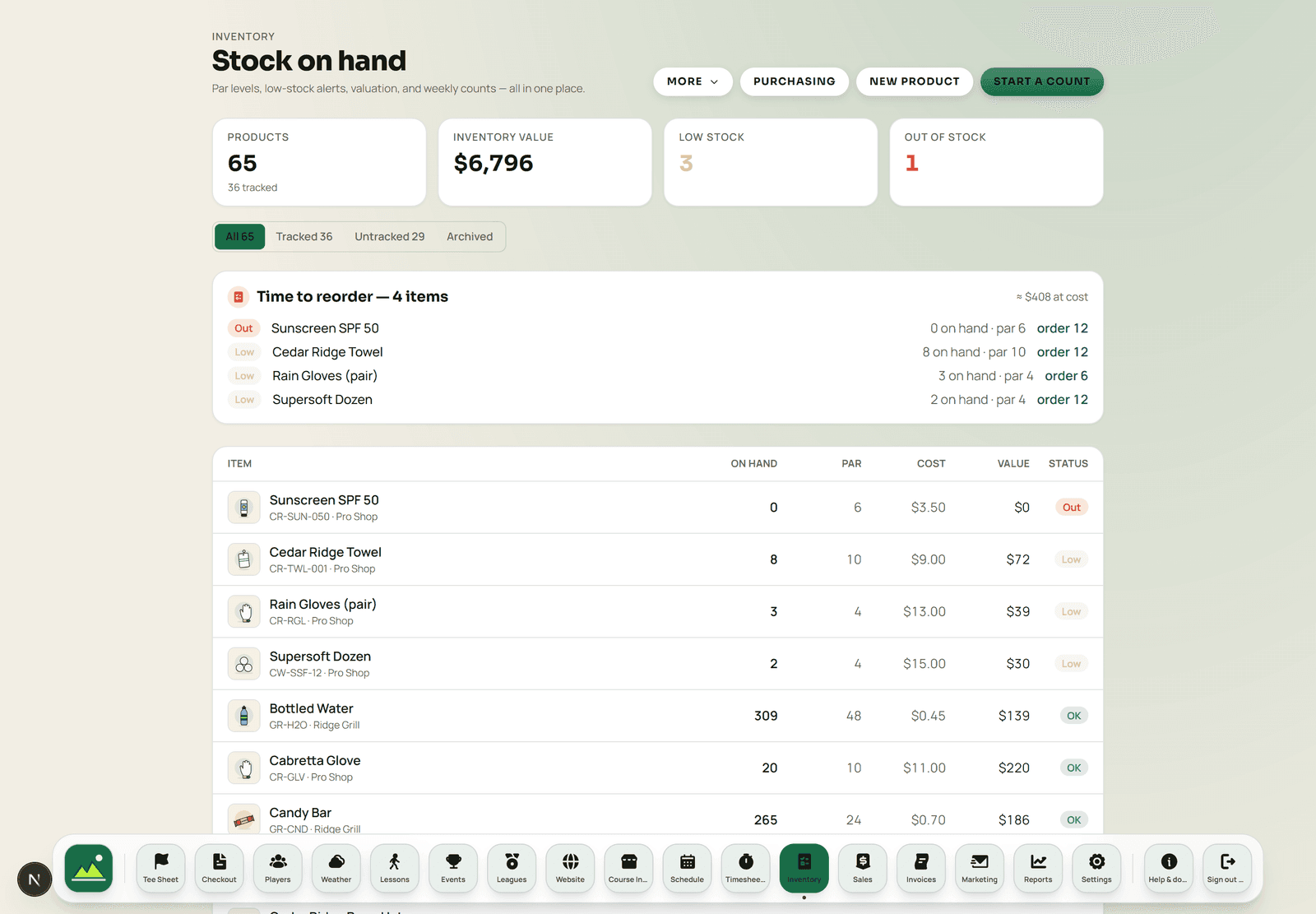 Sample data
The pieces
From purchase order to margin
- Catalogue
- Items with categories, option groups, kitchen notes and either a photo or built-in art, shared by the register and the online menu.
- Purchasing
- Purchase orders and receiving, so ordered, arrived and cost stay attached to the item rather than to an inbox.
- Counts
- Stock counts that reconcile against recorded movement instead of overwriting it silently.
- Barcodes
- Scan packaged goods; mint in-store Code 128 labels for items that arrive without a barcode.
- Cost & margin
- Cost of goods derived from receiving, so margin by item and category is a report rather than an estimate.
- One ledger
- Stock movement and the money post together, which is why inventory and the P&L do not drift apart.
Built for a shop that is also a kitchen
- Option groups with per-choice photos
- Kitchen notes that follow the line to the display and the ticket
- Categories and departments for reporting
- Bulk import of an existing item list
- Item art library for items with no photograph
- Per-course catalogues inside one organization
What this is not

The shop
Stock that agrees with the shelf
Receiving, counts, cost and margin sit on the same items the register sells, so a physical count corrects the books instead of starting an argument with them.
Inventory questions
Does inventory update as things sell?
Yes. A sale at the register moves stock, and the movement posts to the same ledger as the money, so cost of goods and margin are derived from what actually happened rather than from a periodic guess.
What about items with no barcode?
Aced mints an in-store Code 128 number and prints cut-out labels for them. A deli sandwich, a house blend or a pro-shop special then scans at the register like any packaged good.
Can I raise purchase orders?
Yes — purchase orders and receiving are part of the same module, so what was ordered, what arrived and what it cost stay attached to the item rather than living in an email thread.
Do items need photographs?
They benefit from them, and every item can carry either a photo you take or a piece of built-in art, so the register and the online menu look finished on day one instead of showing grey squares.
Bring your item list
Most of the work in a migration is the catalogue. Send yours and we will tell you what imports cleanly and what needs a decision.